Metal Roof Options
Metal Roofing Services in Santa Barbara
Find a metal roof system suited to your property. Get a Free Estimate
Metal Roof Options
Find a metal roof system suited to your property. Get a Free Estimate
Metal roofing is worth considering when you want a roof that combines long-term durability with flexible design choices. From simple roof shapes to more involved residential layouts, metal systems can provide an attractive alternative to conventional roof materials when the correct products and installation details are selected.
Santa Barbara County properties face different conditions depending on their location. Coastal salt air, marine moisture, afternoon wind, and inland heat can influence material selection. At Metal Roofing Santa Barbara, our focus is on helping property owners explore the practical differences among metal roofing systems before choosing an approach.
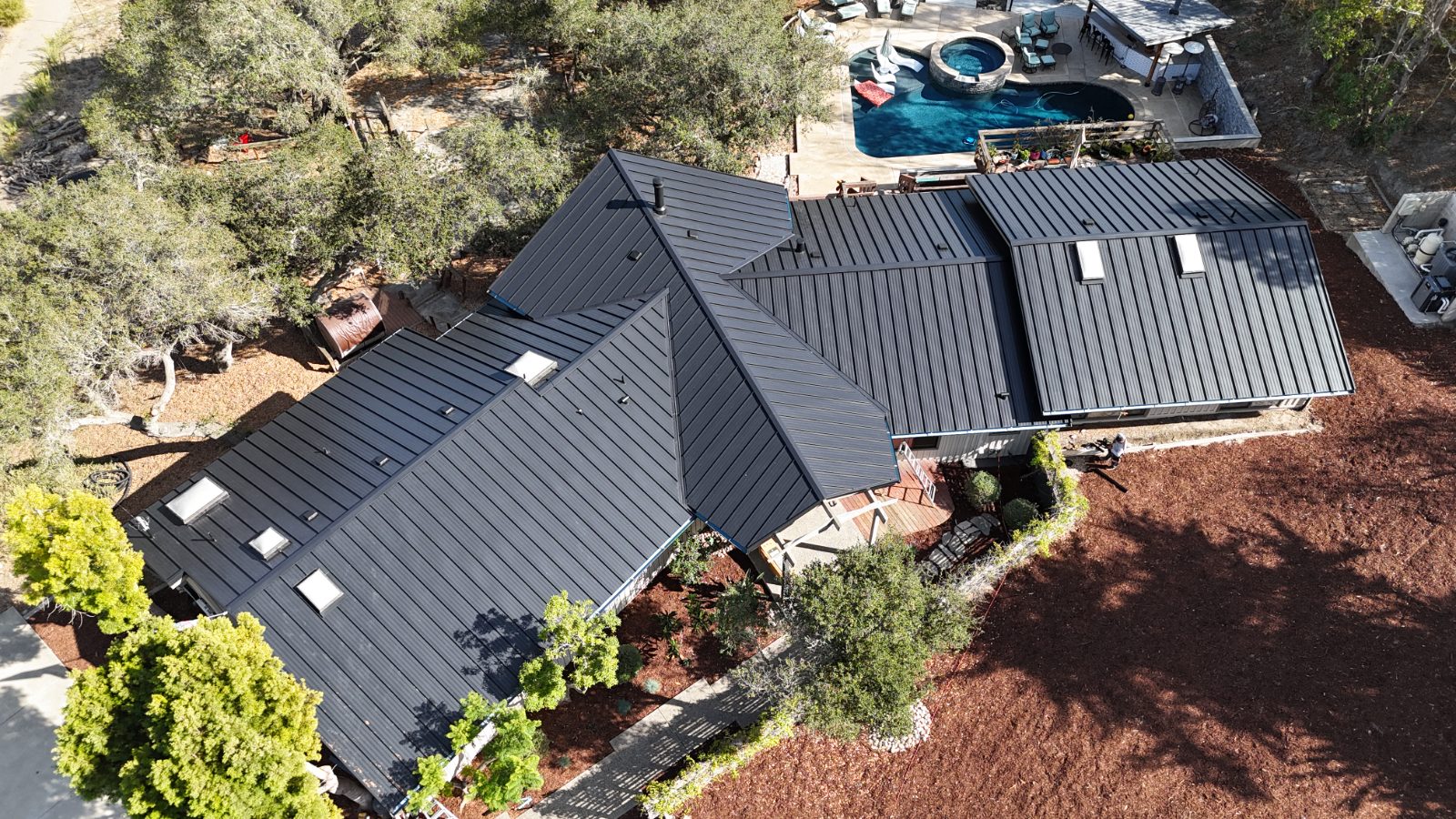
## What Makes a Metal Roofing System Work A successful metal roofing project involves more than attaching metal panels to a roof. The underlying deck, waterproofing components, flashing, fasteners, ventilation, and drainage details all contribute to the finished assembly. The right configuration depends on roof slope, structural condition, surrounding exposure, and architectural goals. We believe these factors should guide the material discussion from the beginning. ## When to Consider Metal Roof Replacement A roof that repeatedly leaks, shows widespread deterioration, or has reached the end of its practical service life may need replacement. Visible damage is not always the full story. Hidden deck deterioration, aging underlayment, and flashing problems may require additional attention. For property owners moving away from asphalt or another traditional roof covering, metal roofing provides several possible alternatives. A change in material may also require adjustments to roof edge details, ventilation, and connections around roof penetrations. Roof weight and structural compatibility deserve consideration, even when the proposed material is relatively lightweight. The existing building should be evaluated before the final system is chosen. ## Metal Roofing and Coastal Conditions Coastal properties deserve particular attention to corrosion protection. Not every metal, coating, or fastening combination is equally suited to marine environments. Manufacturer exposure guidance and compatible components are important. Salt deposits and moisture can affect some roofing components over time. Regular inspection and appropriate cleaning can help owners identify changes before they become larger concerns. ## Roof Appearance and Architectural Fit Metal roofing can suit modern, traditional, agricultural-inspired, and transitional residential designs. Panel width, seam height, profile, finish, and color influence how the roof looks from the street. On homes with complex rooflines, valleys, skylights, and multiple transitions, the design of the flashing and panel layout becomes especially important. A visually appealing roof should also be practical to maintain. ## The Importance of a Complete Roof Assembly Water management begins at the roof surface but continues through the underlayment, flashing, transitions, and drainage system. Metal panels expand and contract as temperatures change, making appropriate attachment and movement allowances important. Ventilation and insulation affect the building's comfort and moisture management. These elements should be considered during roofing planning rather than treated as separate afterthoughts.
For a new building or addition, selecting the roof system early can make important design decisions easier. The planned roof slope, structural layout, drainage locations, and architectural appearance all influence the available materials. Coordination between the roof design and supporting structure helps reduce avoidable complications. We encourage property owners to evaluate panel profiles, protective finishes, underlayment requirements, and flashing details together. A roofing material that looks right on paper must also match the actual conditions of the building.
Replacing an aging roof with metal creates an opportunity to address existing roof problems and reconsider the overall assembly. Before choosing a replacement system, it is important to understand whether the existing roof deck, ventilation, and drainage arrangement are suitable. Roof removal requirements and the condition of underlying materials can affect project planning. Local permit requirements and manufacturer installation instructions also matter. The goal is to avoid covering unresolved problems with a new finished surface.
Different metal roofing materials offer different characteristics. Steel products often rely on protective metallic coatings and finishes, while aluminum and other metals have their own performance considerations. The suitable choice depends partly on environmental exposure and the selected roofing design. Color, texture, profile, and coating compatibility are also important. We encourage property owners to consider how a material will age, what maintenance it may require, and whether its manufacturer approves the application for the building's conditions.
Flashing helps manage water where the roofing surface meets walls, chimneys, skylights, vents, and other openings. Roof valleys, transitions, and edges also require details suited to the selected metal roofing system. These connections are especially important in wind-driven rain. A complete roofing plan should address drainage paths and potential areas of water concentration. Good flashing design works with the roofing material rather than relying on surface sealant as the main line of defense.
Roof shape, location, and existing construction should guide system selection.
We emphasize compatibility between metal products, protective finishes, and local exposure conditions.
We consider appearance, maintenance, and functional requirements together.
We want owners to understand the factors that influence roofing decisions before work is planned.
Thinking about a metal roof in Santa Barbara County? Share your property details and explore your options.
Free — no obligations
Begin with the roof's age, current condition, design, and the reasons for considering metal roofing.
Compare metal types, roof profiles, finishes, and manufacturer requirements for the intended application.
Address structural suitability, roof slope, drainage, ventilation, flashing, and any required approvals.
Establish the roof preparation and installation approach based on the selected system and existing conditions.
Review recommended inspections, cleaning guidance, and product-specific maintenance information.